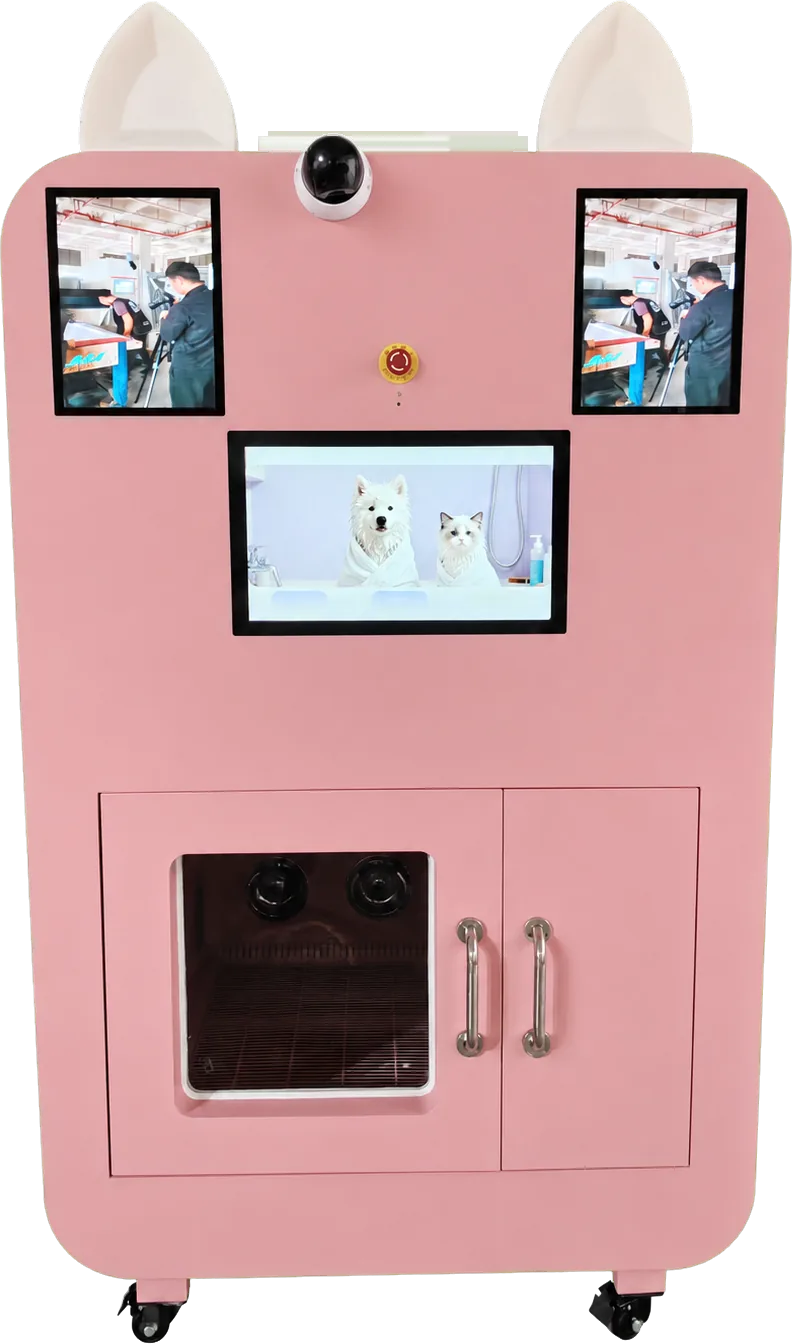
Pet Wash Station for Campgrounds & RV Parks: The Trail Stays Out of the RV
Every camper with a dog faces the same 5pm problem: a muddy animal and a small indoor space. A pet wash station by your bathhouse solves it for $10–15 a time — and becomes the amenity they mention when they book again.
Just your email — we ask for the rest by reply.
We reply within 24 hours on business days.
Pet Wash Demand at Campgrounds & RV Parks
The dog two sites over is not a rare guest. This is the size of the market your park already hosts every weekend.
US pet spending reached $158B in 2025 and is heading for $165B in 2026 (APPA). The self-service dog wash market is growing from $1.5B in 2024 toward a forecast $3.5B by 2032 — about 15% a year (Verified Market Research).
Why a Pet Wash Fits a Campground
Your amenity list is your marketing. This one earns while it markets.
The rebooking amenity
“They had a dog wash” is the detail campers tell other campers. Travelers are 49% more likely to visit a pet-friendly business — and the dog travels on every trip.
Word-of-mouth fuelProtects your facilities
Without it, dogs get washed in your bathhouse showers — fur in the drains you maintain. The machine contains everything internally.
Drains stay clearSeason-long, staff-free revenue
It sells at 7am and 9pm without anyone at the office. Nayax payments — then it disinfects itself for the next guest.
24/7 unattendedInstalls where your utilities already are
By the bathhouse or dump station: water, drain, and power within reach. A 1.2 m² pad and it’s in business.
1.2 m² padWhat Happens to a Muddy Trail Dog Inside the Pet Wash
Campers want to know what the machine actually does to their dog. Here is one cycle, from the card tap to the dry walk-out.
Seven steps, always in the same order
The cycle runs pre-rinse, shower gel, rinse, shampoo, rinse, conditioner, then a final rinse. Nobody has to remember the order or press anything mid-wash.
7 steps per washWater held at a steady 38 degrees
A PID controller keeps the water within 2 degrees of 38 °C for the whole wash. Pressure sits between 0.1 and 0.5 MPa.
38 °C ±2 °CDrying happens in the same cabin
The dog dries where it was washed, at 65 dB or less. Rival machines often run past 100 dB, so a nervous dog copes better here.
65 dB or lessA light scent, no perfume sprays
The dog walks out smelling faintly of shampoo. We leave perfume and essential-oil sprays out entirely, because they are hard on cats' livers and kidneys.
No essential oilsThe owner watches through the window
The owner stays at the glass and follows the entire cycle. There is no stretch where the dog is out of sight.
Full-cycle viewThe cabin cleans itself before the next dog
Ozone and anion, infrared and UV-C run automatically for four minutes. The mud, the hair and the waste water stay inside the machine.
4 minutes · 99.9% of germsOne cycle takes roughly 30 minutes for a small dog and uses 2–2.5 kWh and 0.09–0.11 m³ of water. No staff and no hose are involved at any point, and your bathhouse floor stays dry.
What a Pet Wash Station Earns a Campground in One Season
Parks weigh an amenity two ways: does it fill sites, and does it cost anything to keep. Here is a deliberately conservative season on a mid-size park.
Trails, creeks and rain make dogs filthy by design. The weekends that hurt your other amenities are the ones that fill the wash.
Memorial Day, July 4th, Labor Day — one machine can queue. The double-door PetWash Max runs two doors and an external dryer for parks that see real rushes.
Wash-and-dry or dry-only, by pet size, coat and time tier. A holiday rate and a shoulder-season rate are one backend setting apart, changed from your phone.
Every dog washed in the machine is a dog not washed in your bathhouse shower. Hair and waste water are collected internally each cycle, so the drains you maintain stay clear.
No payroll, no heated room, nothing to staff. You shut it down with the rest of the park. Mild-climate parks simply run all twelve months and land nearer the industry band.
A worked example — your site count, season length and occupancy set the real number. For scale, published operator reports put typical machines at 100–200 washes a month, or roughly $12,000–$24,000 a year. One report puts the average machine at about $17,000 a year. The California parks program mentioned above reports about $120,000 a year across six machines. Operating cost runs $1.20–$3.50 per wash depending on water, power and consumables.
Utilities & Site Requirements for a Park Pet Wash Station
Remote sites make operators nervous about hookups. The list is short, and most parks already pass it at the bathhouse.
What your site needs
- 1.2 m² of level pad — the PetWash Pro is 1190 × 1000 mm and 350 kg, so poured concrete, not gravel
- Water at 0.1–0.5 MPa — a tee off the bathhouse or dump-station line. Well water is fine if it holds that pressure
- A drain — hair and waste water are collected inside the machine every cycle, so nothing heads for your septic field and no interceptor is needed
- 220–240 V or 110–120 V power, whichever your country uses. Each wash draws 2–2.5 kWh and 0.09–0.11 m³ of water
- Wi-Fi or a SIM for card and QR payments and remote monitoring — or run it standalone on coins if your signal is poor
What we handle
- Dimensioned machine drawings for your maintenance team
- Voltage and payment terminal built for your country — Nayax payments with 80+ channels worldwide
- Spec sheets plus CE and RoHS certificates for the county, your insurer and customs
- Remote setup and updates — packages, prices and software all push over the network
- Park-map and signage artwork, plus lifetime tech support by email and video call
Production runs within 25 business days of order confirmation, shipping by sea or by FedEx / DHL / UPS when you need it fast. Networked machines include the free 12-function backend with a multi-site view — useful if your park is one of several under the same ownership.
Pet Wash Safety & Certification for an Unstaffed Park Site
Your office closes at six. The machine keeps selling, so the safety case has to hold with nobody from your team watching it.
What the machine does on its own
- Millimeter-wave radar and infrared life detection — 30 seconds with no signal and the door auto-unlocks
- NTC cutoff kills power if water or air passes 42 °C; the wash itself holds 38 °C ±2 °C
- Physical emergency-stop button on the panel, within reach of the owner standing at the window
- Sealed cabin with fresh-air circulation — and the owner watches the entire cycle through the glass
- Abnormal events push an alert to your phone, so a problem at 9 p.m. reaches you before it reaches a guest
The paperwork guests, insurers and counties ask for
- CE marking (LVD + EMC) and RoHS — certificates supplied with the order
- Spec sheets for permitting and for the wastewater conversation — hair and waste water never leave the machine
- 1-year whole machine, lifetime maintenance
- Faults go by video call: you film it, our engineers diagnose it live, the part ships free with fitting instructions
- We have been in pet wash 10+ years and run our own profitable pet wash stores — you are buying from operators, not only a factory
Our certification is CE (LVD + EMC) and RoHS, and the documents travel with the machine.
Standing Outdoors All Season: Sealed Pet Wash Cabin vs Open Tub
Most parks price an open tub station first, because it looks cheap on paper. Then the season starts — here is what operators report on each, criterion by criterion.
| Open tub station | PetWash Pro sealed cabinet | |
|---|---|---|
| Cleans itself between pets | ✕ staff scrubs after each wash | ✓ 4-minute auto disinfection |
| Keeps hair out of your drains | ✕ hair goes down the drain | ✓ collected inside every cycle |
| Controls odor without a staff routine | ✕ manual dosing nobody owns | ✓ ozone, UV-C, 99.9% of germs |
| Works outdoors with no shelter built | ✕ wants a heated wet room | ✓ rated -10 °C to 55 °C |
| Contains the splash, nothing to mop | ✕ wet room between guests | ✓ sealed cabin |
| Sends the dog home dry | ✕ wet dog shakes off inside | ✓ full drying in the cabin |
| Sells unattended at 7 a.m. and 9 p.m. | ✕ works best with an attendant | ✓ runs unattended |
The sealed cabinet works in the open air or indoors, so one machine covers a pad by the dog run or a corner of the bathhouse.
Picking the Right Pet Wash Machine for a Campground
Outdoors is the point — both picks live there happily.
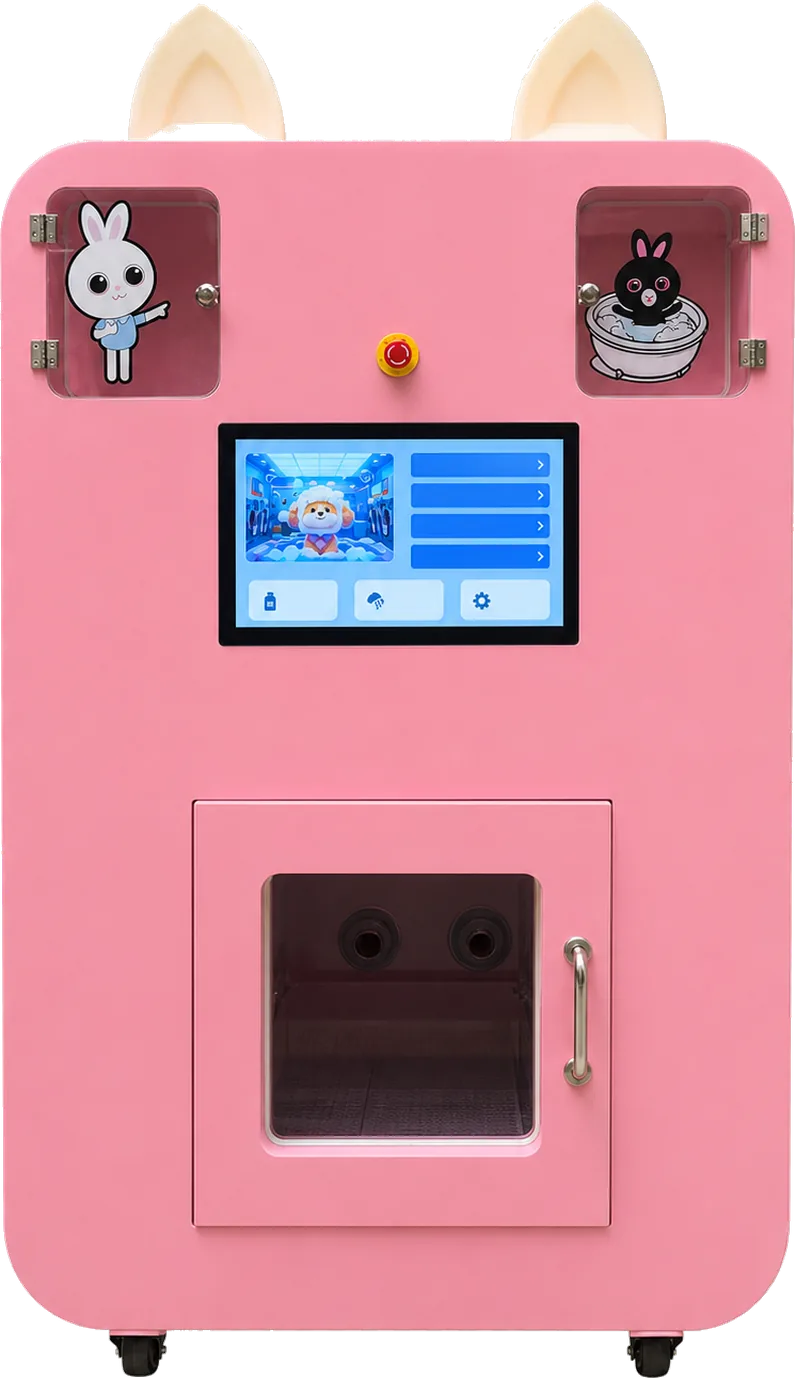
PetWash Pro
Indoor or outdoorWeatherproof steel cabinet, −10 °C to 55 °C, Nayax payments — by the dog run or the bathhouse.
See the Pro →PetWash Max
Indoor or outdoorIt stands on an open pad all season, −10 °C to 55 °C. This is the flagship, and the only model carrying hand tools alongside an automatic cycle. A constant-temperature water gun and dryer wait behind the second door, for the mud a cycle can't reach. The other side washes and dries a dog unattended.
See the Max →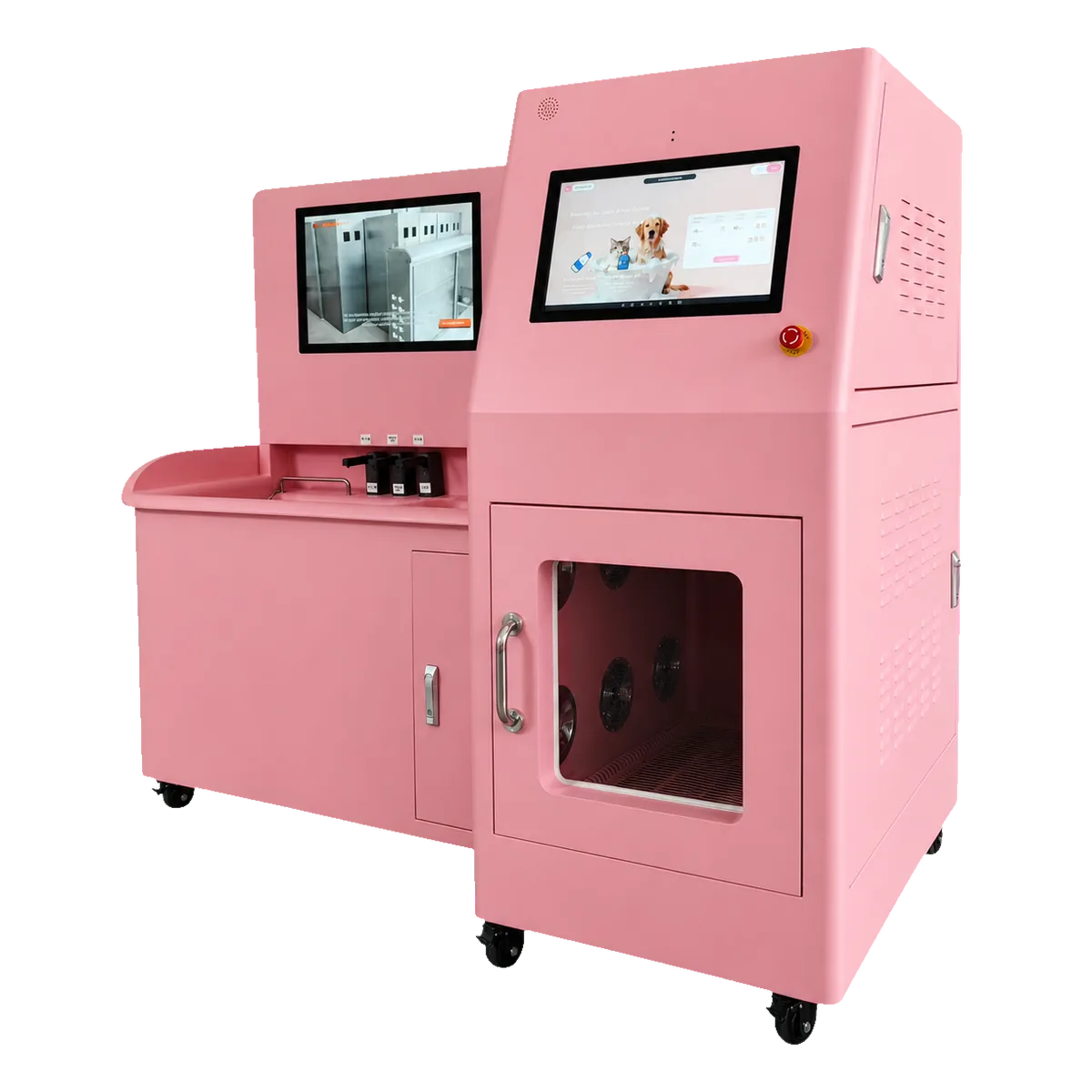
PetWash Tub
Indoor or outdoorWorth it only if someone is on shift. Staff wash trail mud off in the open bath, then move the dog into the drying cabinet beside it. Four labelled taps cover coat care, flea and tick, bath gel and water. It is also the only model with soak baths.
See the Tub →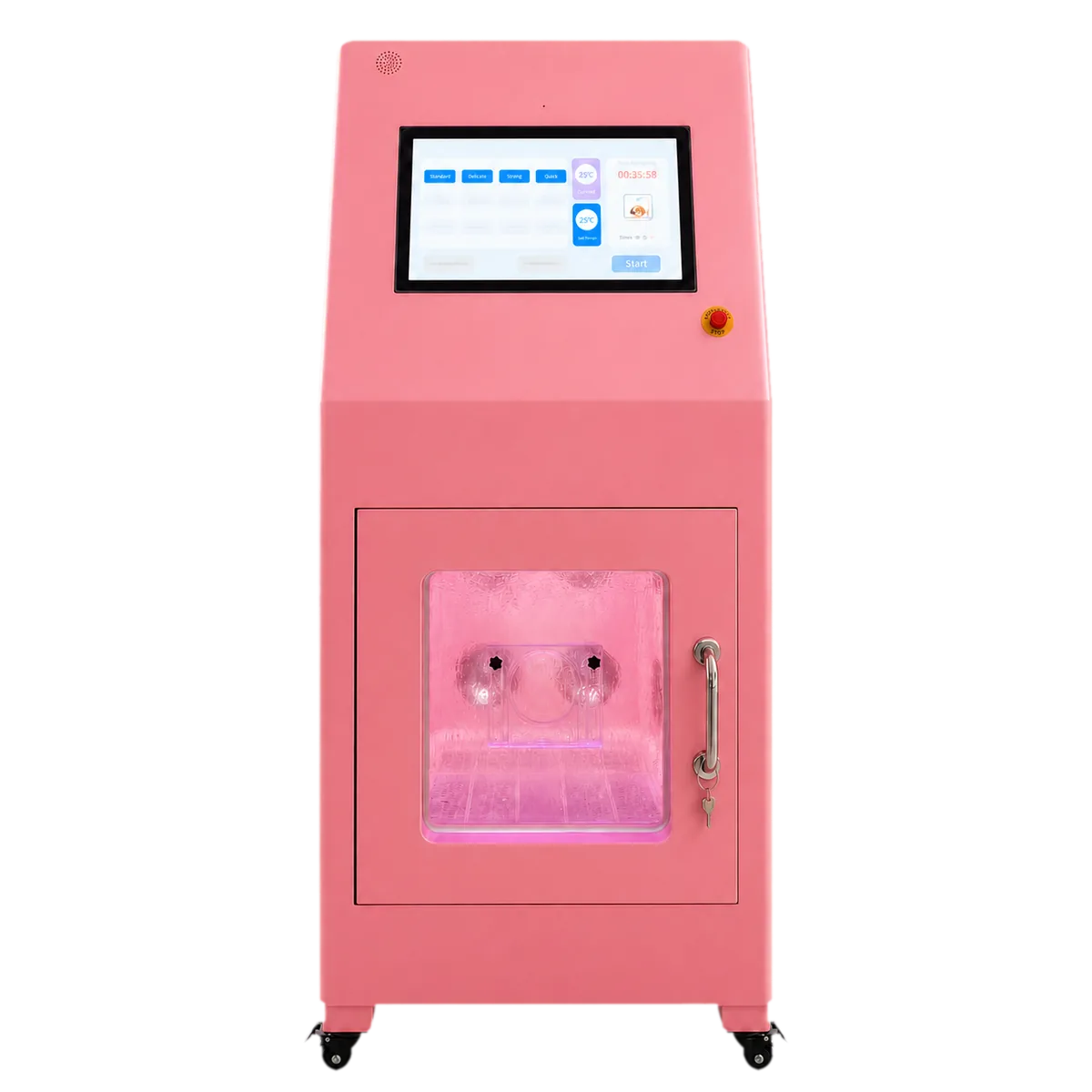
PetWash Store
Indoor or outdoorOnly 78 cm wide, so it fits a service pad the larger cabinets would overhang. Weatherproof steel, full automatic to 70 kg, and 298 kg means two people can position it.
See the Store →Certified for Export: CE, LVD, EMC & RoHS
You don’t have to worry about compliance. Every machine already meets CE, LVD, EMC, and RoHS standards, and we hand you the documents you need for customs, insurance, or your property manager.
CE certified
CE is the EU’s official conformity mark, and we include the certificates with your order for customs, insurers, and property managers.
LVD tested
LVD stands for the EU Low Voltage Directive, the electrical safety test that CE certification is built on. Tested to IEC 60335-2-75 with IEC 60335-1 — the standard written for commercial dispensing appliances.
EMC tested
It means the machine won’t cause electromagnetic interference with payment terminals or nearby equipment.
RoHS compliant
RoHS compliant means the machine is free of restricted hazardous substances, so it’s safe to import and operate. Assessed to EN IEC 63000:2018.
Where Else a Pet Wash Station Earns
Add the Pet Wash Station Campers Book Again For
Your country and how many machines is all we need to start. Pricing and lead time come back inside 24 hours, with an honest answer about your winters.
- Factory-direct price, no middleman
- Outdoor steel build — no shelter required
- Climate advice included, honestly
- Park-map signage artwork included
No spam. Your details are used only to prepare your quote.
Pet Wash for Campgrounds — FAQ
What park operators ask before adding one.
Where do parks usually place a pet wash station?
Near the bathhouse or dump station — where water, drainage, and power already run. It needs a 1.2 m² pad. The machine collects hair and waste water internally, so it won’t clog your park’s drains.
Does a pet wash machine survive outdoors year-round?
The PetWash Pro is a weatherproof steel cabinet rated −10 °C to 55 °C, washing at a constant 38 °C. If your winters drop below −10 °C, tell us — we’ll advise winterization or seasonal shutdown honestly.
What should we charge guests for a pet wash?
Parks typically set $10–15 per wash. One California parks program reports about $120,000 a year across six machines, or roughly $20,000 per machine, at 100–200 washes a month. Your traffic decides yours. Put our quote next to a yearly figure like that and your payback window is one division.
Is it complicated for guests?
Pay, load, watch through the window, leave with a dry dog — the screen walks them through it. Water holds a constant 38 °C, safety sensors monitor the pet throughout, and the machine disinfects itself before the next guest.
What is the lead time on a pet wash machine order?
Allow 25 business days to build, plus transit. Parks usually order over winter so the machine lands before opening weekend, and sea freight is the sensible choice at that lead time.
How do we handle the pet wash machine in the off-season when the park closes?
Shut it down with the rest of the park. There is no payroll and no heated room to carry, so a closed season costs you nothing to hold. Tell us your winter lows when you order. We will give you a straight winterization answer for your climate, including "move it indoors" if that is the honest one, since the cabinet is rated to −10 °C. Software updates install remotely, so the machine wakes up in spring current rather than three versions behind, and it runs its 4-minute disinfection cycle before the first pet of the year.
Does a short season still justify the machine?
It pays back over more seasons rather than fewer. A 6-month season at 120 washes a month and $12 a wash is roughly $8,640 gross and about $7,560 net. Full-year sites sit in the published band of 100–200 washes a month and $12,000–$24,000 a year, and one published operator report publishes about $15,000 average annual profit per unit with a 12–24 month payback. A seasonal park stretches that timeline — but the amenity keeps working on your bookings even while the machine is switched off.
What does a pet wash machine cost?
What a park is really paying for is a machine that stays out on its pad from opening weekend through closing, then does the same the following year. The cabinet is international-standard steel; a decade of sun, rain, and frost later, the finish is still on it. The base plate is rounded and finished by hand. Write to us with your country and the number of machines, and pricing follows within 24 hours.
What happens if the pet wash machine breaks and we are four hours from a city?
In season you're four hours from the nearest service center, so a breakdown on a holiday Saturday sends muddy dogs back into your bathhouse. No one drives out. Show the fault on a live call; the engineers who built the machine usually recognize it, since they fix the same ones in the wash stores we run. The part ships free, software gets patched over the air. The whole machine is covered for one year, with support for life.
Does a campground pet wash need permits or a wastewater approval?
Usually far less than a construction project, and the machine helps the conversation. Pet wash wastewater generally cannot discharge to a septic system — which matters at a park — but ours collects hair and waste water internally every cycle instead of flushing them out. We supply the spec sheets plus CE (LVD + EMC) and RoHS certificates your county inspector, insurer or landowner will ask to see.
Will it take a big trail dog?
Yes. The PetWash Pro and the double-door Max both take pets up to 70 kg in the same large cabin. Drying runs at 65 dB or less, where many machines pass 100 dB, so nervous dogs cope better. For a first visit, an owner can buy a short dry-only cycle and let the dog learn the cabin is fine. Cats and small dogs up to 15 kg also fit — the Mini is built for them and runs on a normal wall socket.