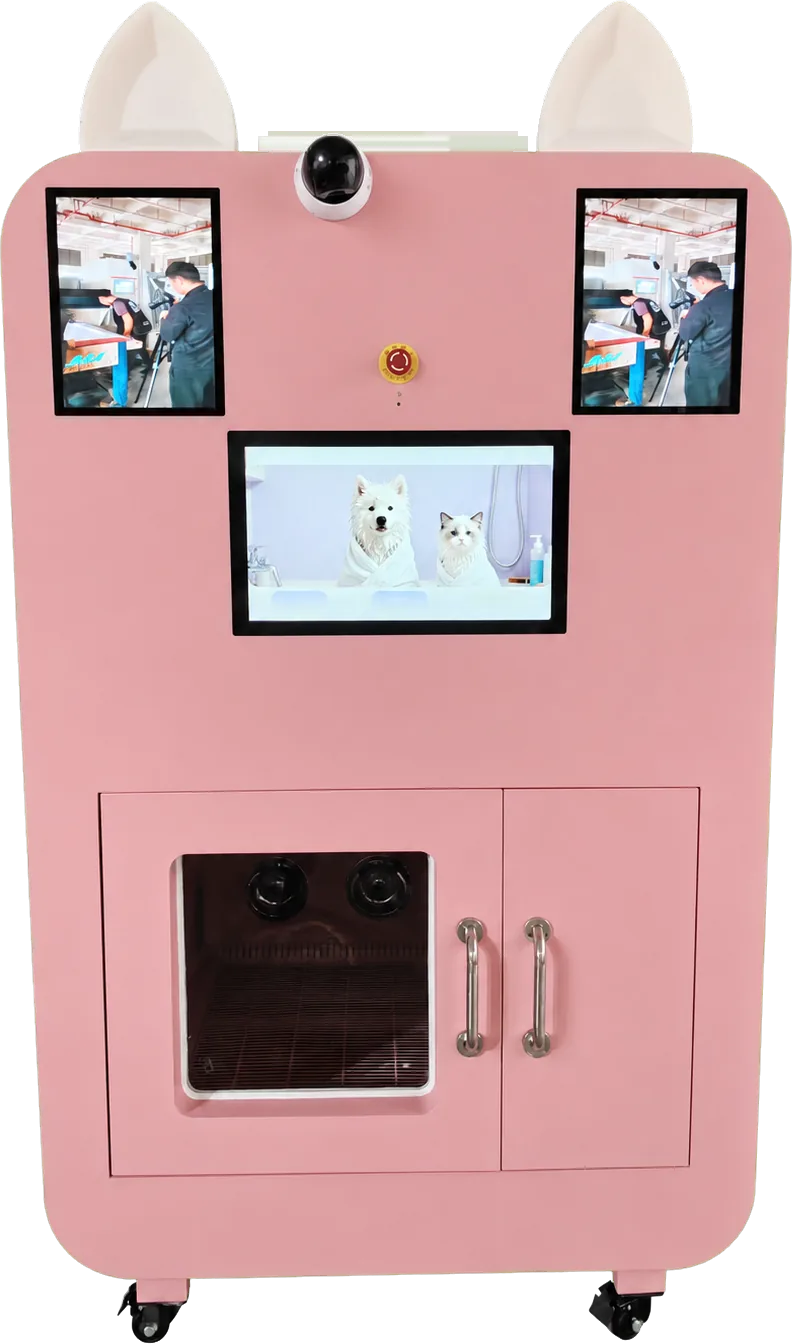
The Pet Wash Station for Truck Stops — Open 24/7, Like You
Long-haul drivers bring the dog — for company, for security, for sanity. That dog lives in a cab for weeks and gets washed wherever the route allows. Put a 24/7 pet wash station at your exit, and the route allows you.
Just your email — we ask for the rest by reply.
We reply within 24 hours on business days.
Truck Stop Pet Wash Demand, in Numbers
Drivers with dogs is not a hunch. Here is the size of the pet traffic already rolling past your exit.
US pet spending hit $158B in 2025 and is heading for $165B in 2026 (APPA). The dog in the passenger seat is a spending household, not a stray.
Why a Pet Wash Station Fits a Travel Center
You sell everything a driver needs in 45 minutes. This is the one thing the dog needs.
Fits the stop, exactly
Fuel, shower, meal — 45 minutes. The dog’s wash-and-dry cycle runs 30, unattended, while the driver eats. Nobody waits on anybody.
30-min cycleLoyalty on a route
Drivers run the same corridors weekly. The stop that washes the dog becomes the stop — on every pass, both directions.
Repeat by designForecourt economics
Unattended, Nayax payments, self-cleaning between customers, status to your phone. It runs like a fuel pump that sells $10–15 washes — at 100–200 washes a month, that’s $12,000–24,000 a year.
Zero laborBuilt for your environment
Diesel lot, weather, occasional rough handling — steel cabinet, locked vault, tempered window, camera-monitored.
Steel · monitoredWhat a 24/7 Pet Wash Station Earns at a Truck Stop
One machine, no payroll, selling the hours every staffed groomer is shut. Here is the arithmetic on a mid-range exit.
Nothing competes with you for a 3am dog wash. Night hours are hours a staffed groomer can never sell, and they cost you no extra payroll because there is no payroll.
Drivers run the same lanes weekly, both directions. One wash that goes well quietly books the next dozen. Repeat is the whole model here, not a bonus.
A 70 kg dog is not a $10 dog. The screen sells wash+dry or dry-only across size, coat and time tiers, so your average ticket sits above your entry price.
RV travelers and pet-hauling families lift the same machine's count for months without touching your driver demand.
The gap between 100 and 200 washes a month is mostly a signage question. We supply the lot sign, lounge poster and pump-topper artwork so the machine is visible from the fuel lanes.
These figures come from third-party operator reports. Buying factory-direct removes the trader margin — send us your country and how many units you need, and exact pricing comes with the quote within 24 hours.
Pet Wash Station Utilities, Install and Permit Paperwork
Two lists. What your lot has to provide, and what arrives with the order for your permit, customs and insurance file.
What the pad needs
- About 1.2 m² of level concrete. The PetWash Pro is 1190 × 1000 × 1900 mm and 350 kg. No canopy, no wet room, no building.
- 220–240 V or 110–120 V supply, whichever your country uses. Cold water at 0.1–0.5 MPa. The machine heats it to 38 °C ±2 °C under PID control and holds it there for the whole cycle.
- 2–2.5 kWh and 0.09–0.11 m³ of water per wash. That is the entire utility load, whether it runs at noon or at 3am.
- A drain connection. Hair and waste water are collected inside the machine every cycle, so fur never reaches your lines — the number one reported failure on open tubs.
- Open-air siting, −10 °C to 55 °C. Weatherproof steel cabinet. It stands by the car lot or the RV lanes, not inside your store.
What we hand you for the file
- CE (LVD + EMC) and RoHS certificates, supplied with the order — the documents customs, your insurer and a property manager actually ask to see.
- Spec and drainage documents for the permit application. Because hair and waste water are captured internally each cycle, most sites are a connection job, not a wastewater build-out.
- Dimensioned machine drawings with utility hookup points
- Nayax payments terminal fitted on every machine, so it takes payment the way your forecourt already does.
- The free 12-function backend if you network it — sales, faults and a multi-site chain view from one login. Standalone operation works too.
- Lead time within 25 business days after order confirmation, shipped by sea or by FedEx / DHL / UPS.
We hold CE (LVD + EMC) and RoHS. The cabinet is weatherproof steel, rated to operate from −10 °C to 55 °C.
Is an Unattended Pet Wash Safe and Secure at 3am?
Two questions come up every time: what happens to the pet, and what happens to the machine. Both are answered by hardware, not by staff.
What keeps the pet safe
- Millimeter-wave radar and infrared life detection run through the entire cycle.
- If the life signal drops for 30 seconds, the door unlocks itself. No code, no phone call, no staff member walking over.
- An NTC cutoff kills power the moment water or air passes 42 °C.
- A physical emergency stop sits on the panel, and the owner can hit it from outside the cabin.
- The driver stands at the window for all 30 minutes. The cabin is sealed but circulates fresh air.
- Drying runs at 65 dB or less, while hand-held force dryers push past 100 dB.
What you never have to do at 3am
- No trip out to the lot. Anything abnormal pushes an alert straight to your phone.
- No waiting until Monday. You can take the unit offline remotely as soon as the alert lands.
- No cash box sitting on your lot overnight. The Nayax terminal can run the machine card and QR only.
- No night guard duty. Steel cabinet, locking door, tempered window, all inside your existing camera coverage.
- No scrubbing between dogs. Ozone and anion, infrared and UV-C disinfection runs four minutes after every wash and kills 99.9% of germs.
- No hair in your drain lines. Every cycle collects the hair and the waste water inside the machine.
None of this needs an attendant on the lot, which is the one promise an open self-serve bay can never make.
Picking the Right Pet Wash Machine for a Travel Center
Built for the forecourt, sized for the rush.
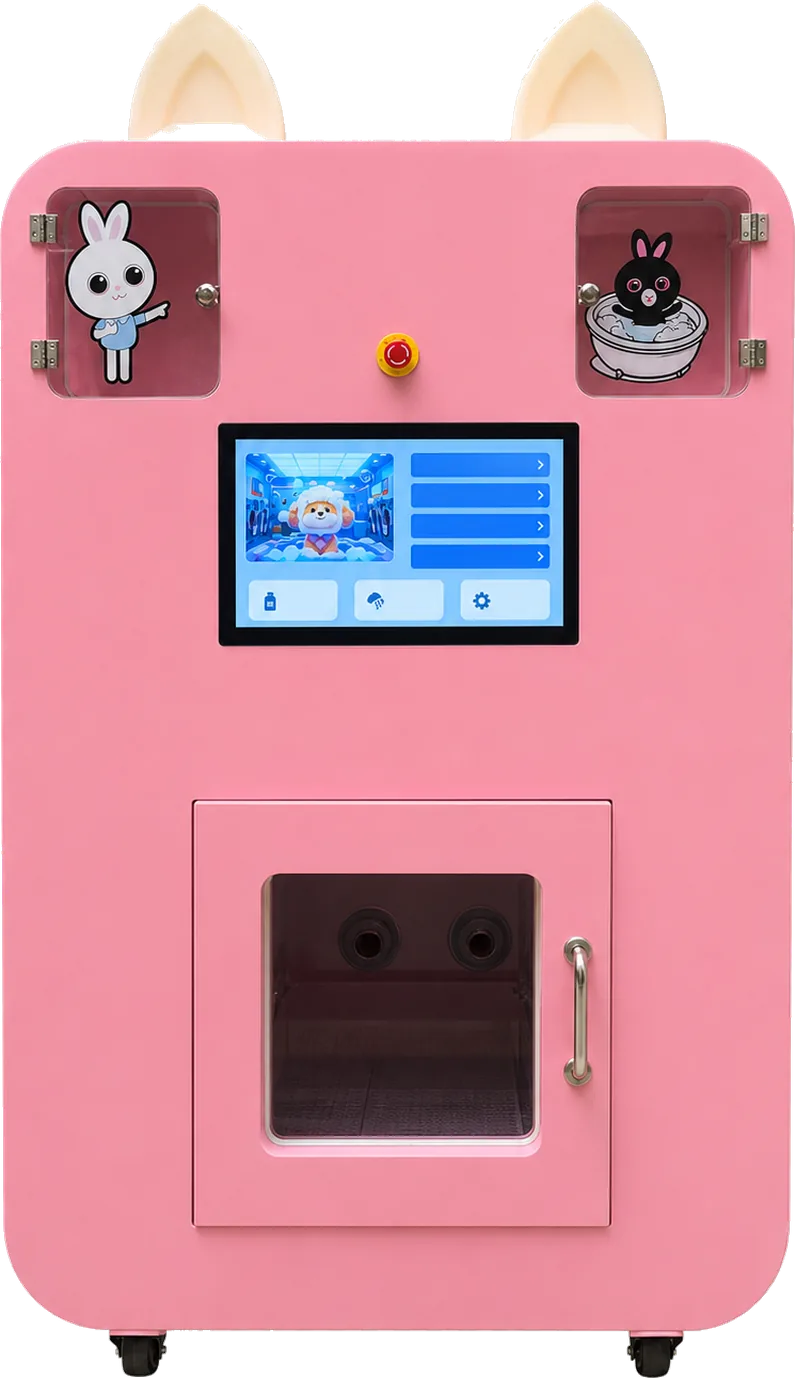
PetWash Pro
Indoor or outdoorWeatherproof steel cabinet, −10 °C to 55 °C — runs by the fuel lanes around the clock.
See the Pro →PetWash Max
Indoor or outdoorA dog rolling in off a long haul isn't always a job for a program. That's what the Max's second door is for — a manual bay with a constant-temperature water gun and dryer, for when hands beat a cycle. The other side runs all seven steps unattended, whenever the truck pulls in. Our flagship, and the only model that does both.
See the Max →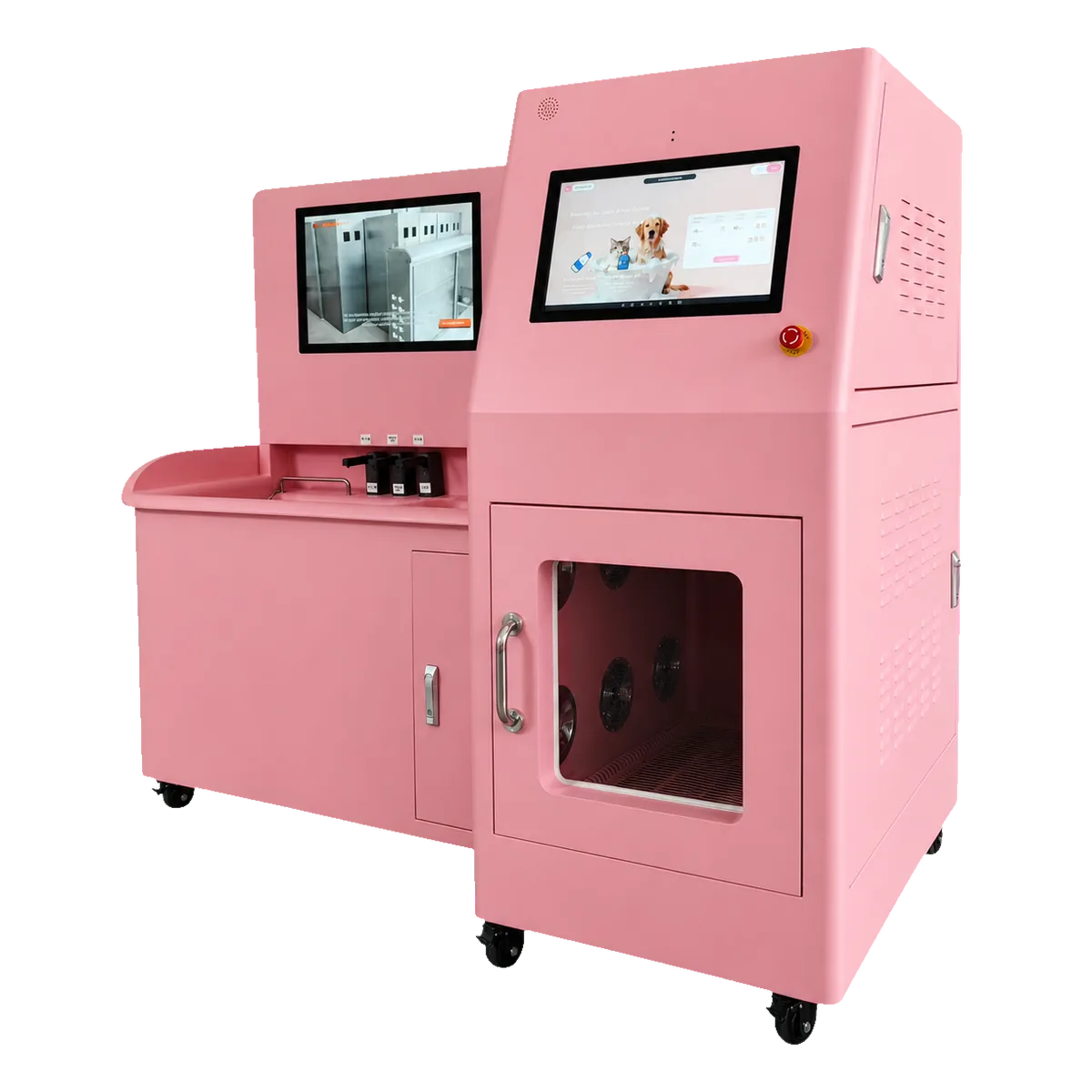
PetWash Tub
Indoor or outdoorFor stops that already keep someone in the pet area. One person washes in the open bath while the last dog dries next door, so a queue of drivers keeps moving. Soak baths are on the menu, and no sealed cabin offers those.
See the Tub →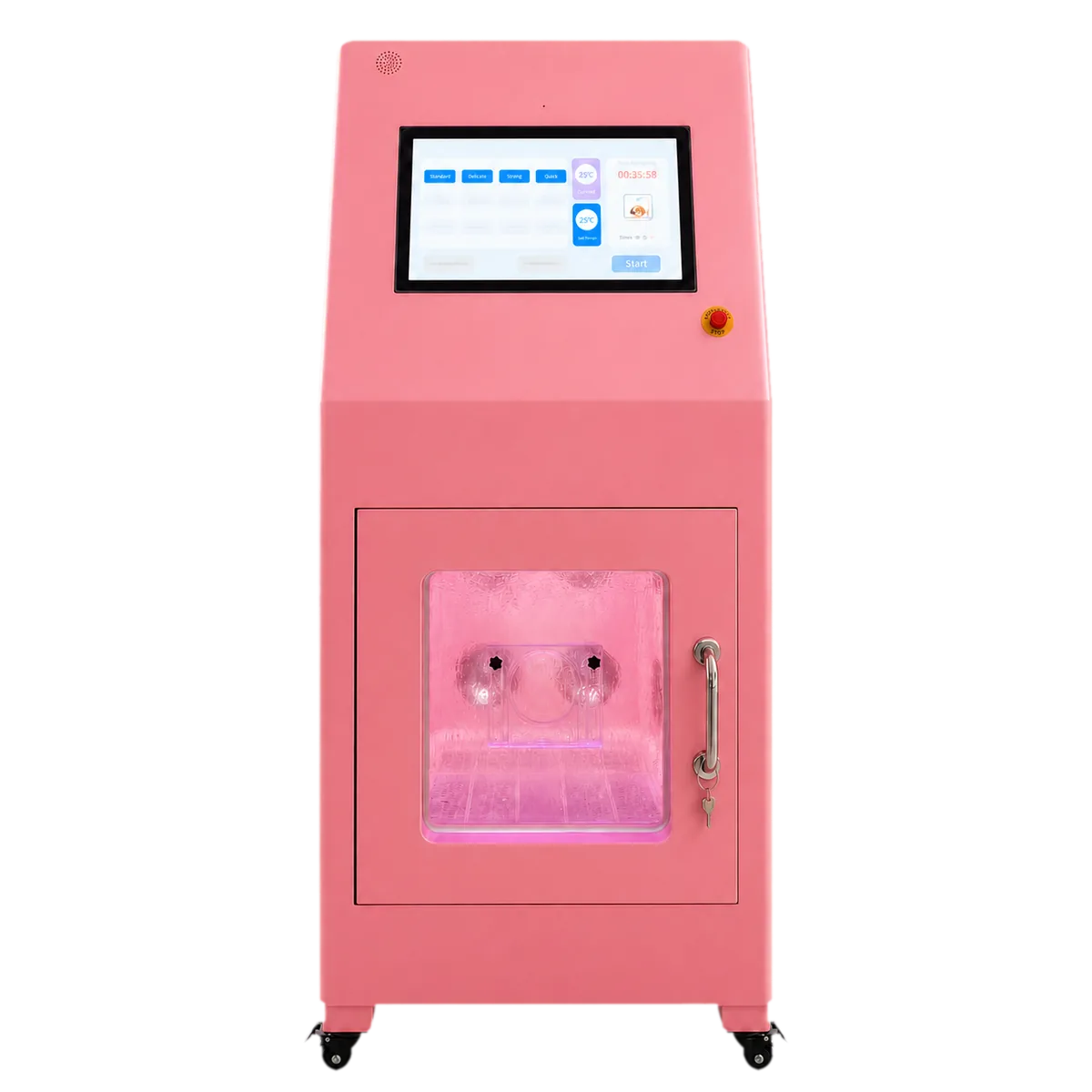
PetWash Store
Indoor or outdoorThe narrowest full-size machine we build at 78 cm. It slots between a canopy column and the walkway where the flagship will not fit, and still washes any dog to 70 kg.
See the Store →Certified for Export: CE, LVD, EMC & RoHS
You don’t have to worry about compliance. Every machine already meets CE, LVD, EMC, and RoHS standards, and we hand you the documents you need for customs, insurance, or your property manager.
CE certified
CE is the EU’s official conformity mark, and we include the certificates with your order for customs, insurers, and property managers.
LVD tested
LVD stands for the EU Low Voltage Directive, the electrical safety test that CE certification is built on. Tested to IEC 60335-2-75 with IEC 60335-1 — the standard written for commercial dispensing appliances.
EMC tested
It means the machine won’t cause electromagnetic interference with payment terminals or nearby equipment.
RoHS compliant
RoHS compliant means the machine is free of restricted hazardous substances, so it’s safe to import and operate. Assessed to EN IEC 63000:2018.
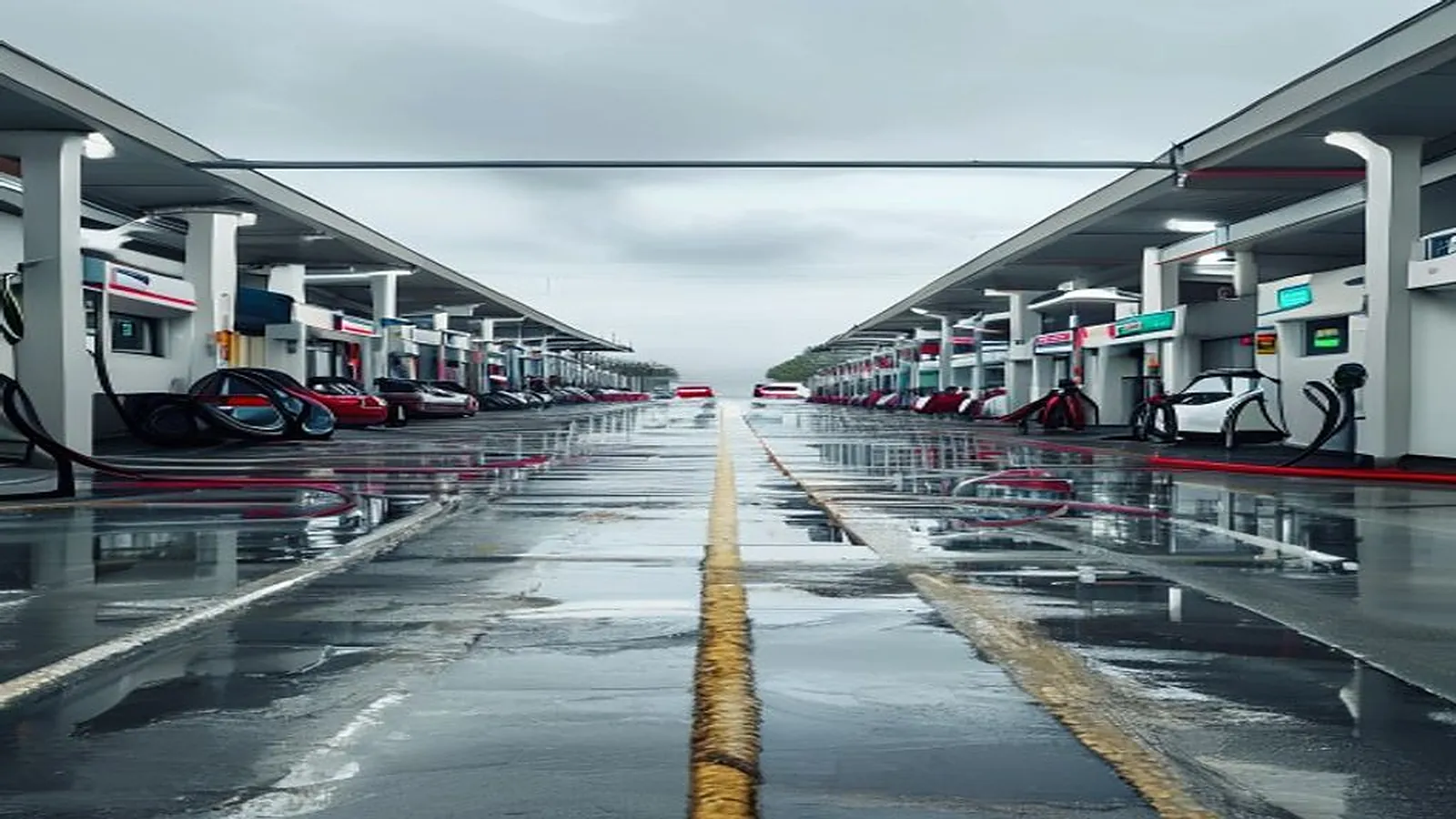
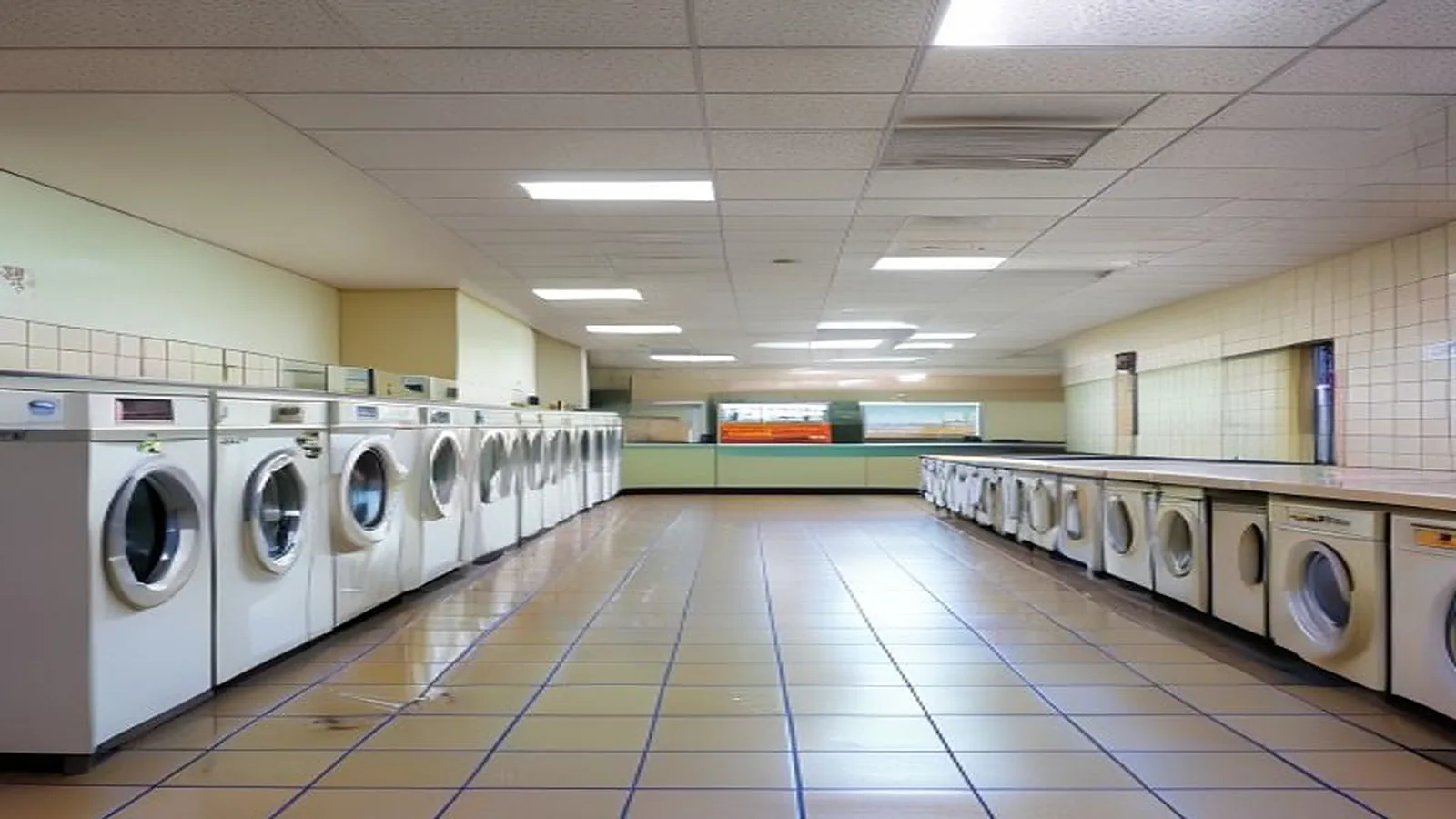
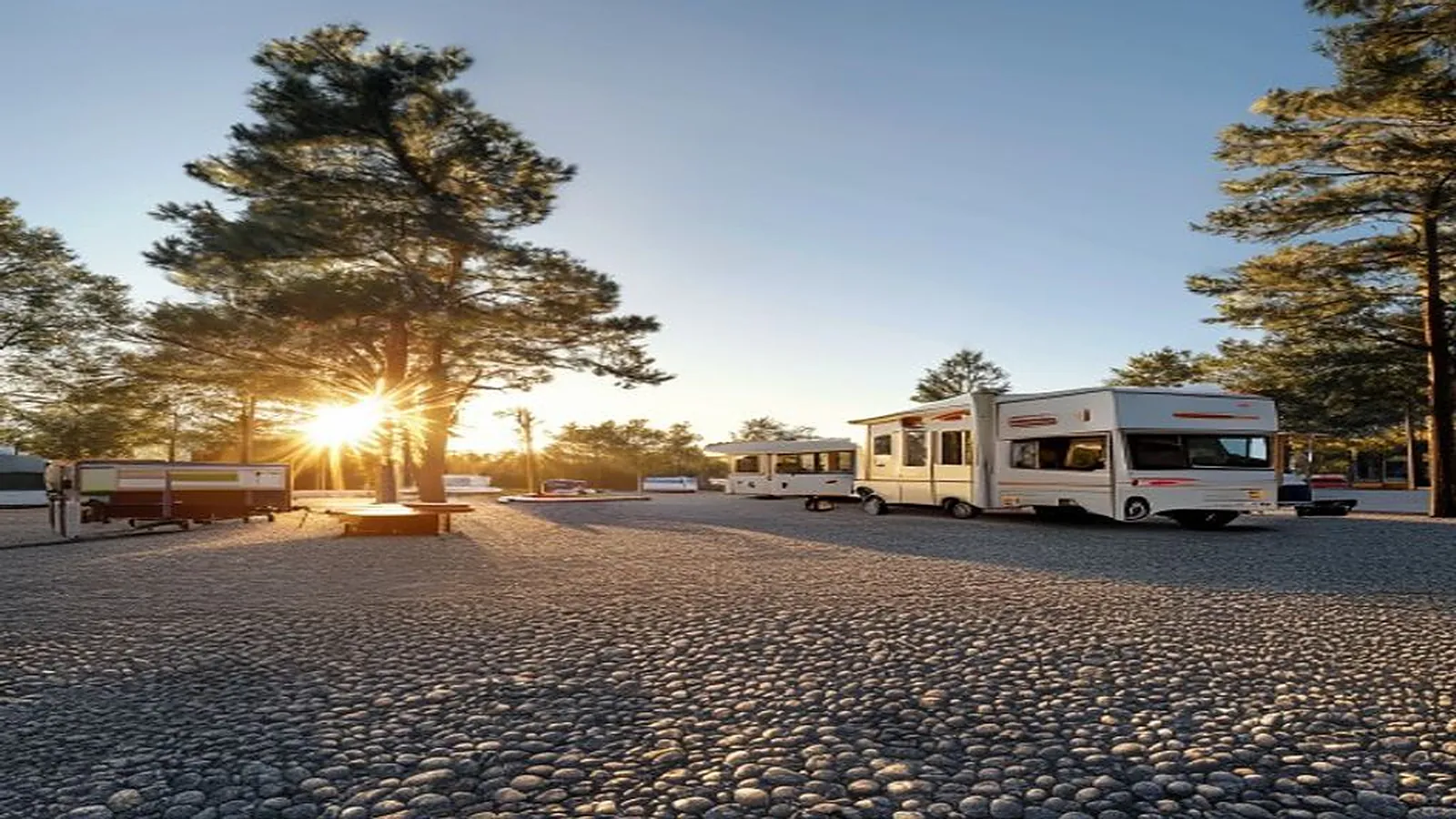
Where Else a Pet Wash Station Earns
Put a Pet Wash Station at Your Exit — Get a Factory Quote
Send the country and how many machines. Within 24 hours you will have a price, the lead time, and the weatherproofing detail your maintenance lead will ask about.
- Factory-direct price, no middleman
- Outdoor steel build for forecourt life
- 24/7 unattended, monitored from your phone
- Signage artwork included
No spam. Your details are used only to prepare your quote.
Pet Wash for Truck Stops — FAQ
What travel-center operators ask before adding one.
Do truckers really travel with dogs?
The dog is long-haul trucking’s favorite co-driver — companionship and security across weeks on the road. Those dogs live in a cab and get washed wherever the route allows. A marked dog wash is a reason to pick your exit.
Where does a pet wash station install at a truck stop?
On a 1.2 m² pad near the car parking or the RV lanes — where water, drainage, and power already run. A built-in hair trap catches fur before the drain, so it never clogs your lines. Weatherproof steel cabinet; no canopy required. If you want one anyway, we can supply an optional canopy for any outdoor model — just say so when you order.
Is a pet wash machine really zero-staff?
Yes. Nayax payment; safety sensors monitor water temperature and the pet through every cycle; the cabin washes, dries, and disinfects itself after every pet; cameras record and alerts push to a phone. The only time your team touches it is to restock shampoo.
Does an outdoor pet wash machine keep running in winter?
It operates to −10 °C, washing at a constant 38 °C with full drying before the dog goes back to the cab. Colder region? Tell us — we’ll advise honestly.
What is the lead time on a pet wash machine order?
Twenty-five business days to build. Sea freight suits most forecourt orders; courier is available when a site is opening to a fixed date.
What does one pet wash cost you to run?
Power and water come to 2–2.5 kWh and 0.09–0.11 m³ per wash. Add shampoo and conditioner and the industry figure for operating cost lands between $1.20 and $3.50 a wash, consumables included. Against a $10–15 ticket, most of what the driver pays is margin. There is no labor line at all — the machine takes the payment, runs the 7-step cycle, dries, disinfects itself and collects the hair.
What certificates ship with the pet wash machine?
CE (LVD + EMC) and RoHS, and those certificates ship with the order for customs, your insurer and your property manager. The cabinet is weatherproof steel, built to operate in open air from −10 °C to 55 °C, which is what the PetWash Pro is designed for.
What happens if the pet wash machine faults at 2am on a Sunday?
A dead machine at 2am Sunday costs more than one wash — it costs the driver who planned around it. Get our engineers on a live video call and show them the fault; they designed this machine, so naming it rarely takes long. Parts ship free, and software problems we fix remotely. One year on the machine, five on the motor and water maker, maintenance for life. We run wash stores ourselves, so the fault is seldom new to us.
How long before a truck stop pet wash pays for itself?
Work it from washes rather than from a list price. Operators report 100–200 washes a month, and published operator reports put average machine revenue around $15,000–17,000 a year. Running costs are $1.20–3.50 a wash, and there is no labor line at all. Put our quote next to that yearly figure and your payback window is one division. We are the factory, so there is no trader margin in the number, and what you pay depends mainly on how many units you order. Tell us where you are and how many you want, and we will price it inside 24 hours.
Will the shampoo bother a dog that sleeps in the cab?
We deliberately do not use perfume or essential-oil sprays — those can harm a cat's liver and kidneys, and a dog sleeping in a closed cab does not need to be doused in fragrance either. The gentle shampoo leaves a light fresh scent and nothing more. Water is hydrogen-rich and held at 38 °C ±2 °C, and the dog goes back to the cab fully dried, not damp.