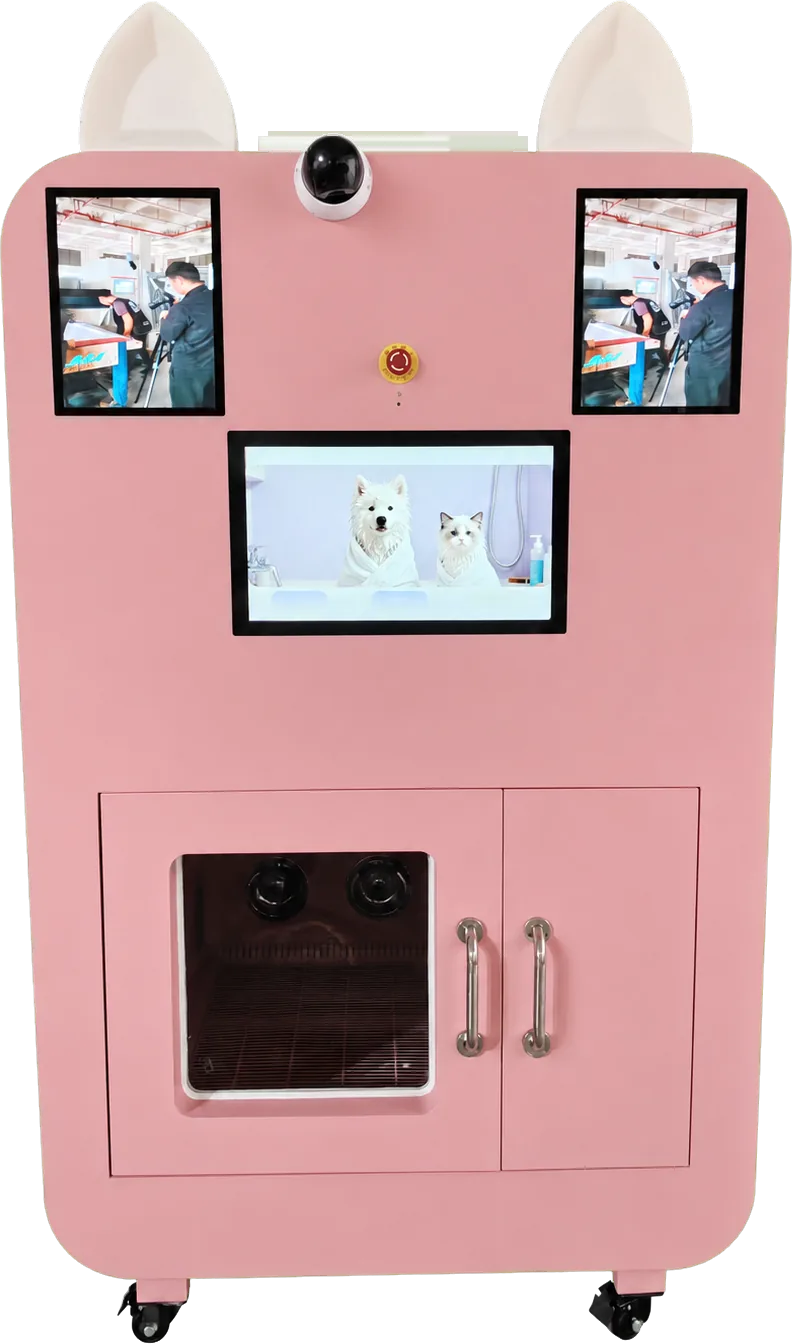
The Dog Daycare Pet Wash Station That Sends Every Pet Home Clean
Daycare parents pay $18–30 a day for a tired dog. They’ll pay $15–20 more for a tired, clean dog — especially after splash day. The pet wash machine makes that upsell a 30-minute button press, not a staff hour.
Just your email — we ask for the rest by reply.
We reply within 24 hours on business days.
The Numbers Behind a Dog Daycare Bath Add-On
Every dog on your roster is already on a bath schedule. Here is what that market looks like outside your building.
Self-serve wash pricing sits at $15–25 across the US — Petco $20, Pet Supplies Plus $15 per 30 minutes. Daycares price the add-on at the top of that range because the dog is already with you and nobody had to drive anywhere.
The Dog Daycare Day, With and Without a Pet Wash Station
Same dogs, same staff, different last hour.
Without
- Splash day ends in twenty towels and damp dogs
- “Sorry about the mud” texts to parents
- Bath requests declined — no staff to spare
- The pickup rush is chaos with extra fur
With
- 4:00pm: first dog loads; 4:35: fluffy and ready
- “Bath before pickup?” asked at every drop-off
- Back-to-back baths through the pickup rush — up to 4 per machine in the last two hours
- Parents post the clean-dog pickup photo — free marketing
Staff Hours vs Machine Time on a Dog Daycare Bath
The bath still takes 30 minutes either way. The real question is whether a person has to spend them too.
| Hand bath by staff | PetWash cabin | |
|---|---|---|
| Bath takes about 30 minutes | ✓ | ✓ |
| Staff free once the dog is loaded | ✕ holds the dog throughout | ✓ load and unload only |
| Skips filling, towels and dryer holding | ✕ all done by hand | ✓ the cabin does it |
| Seven wash steps run on their own | ✕ a person runs each step | ✓ PID holds 38 °C |
| Runs back to back in the pickup rush | ✕ one person, one dog | ✓ 3-4 dogs per machine |
| Yard supervision ratio stays the same | ✕ someone leaves the floor | ✓ nobody leaves the floor |
| The add-on keeps getting sold | ✕ quoted, then quietly dropped | ✓ anyone can run it |
Load, press start, go back to the yard. The 30 minutes is machine time, not payroll.
What a Bath-Before-Pickup Add-On Earns a Dog Daycare
Run it on your own roster. This is a 40-dog day at a deliberately modest yes-rate.
Rain used to mean apology texts and a refund risk. Now your muddiest days are your highest-conversion days, and the parent is glad you asked.
The average US groom is $60. A $15–20 bath the parent does not have to book, drive to, or wait for is an easy yes — which is why the add-on converts far above what a cold self-serve machine does.
Healthy dogs need a bath every 4–6 weeks (AKC). A regular who comes three days a week fills that window on his own. One conversation at enrollment, then it repeats every month he stays with you.
Back-to-back 30-minute cycles put 3–4 clean dogs into the pickup queue per machine. Big rosters run two machines, or one double-door PetWash Max with its external dryer, and double that.
A worked example — your roster, your pricing and your local rates set the real number. Consumables run $1.20–$3.50 per wash. Buying factory-direct removes the trader margin, and your exact price comes with the quote within 24 hours.
Pet Safety and Between-Dog Hygiene in a Daycare Wash Station
Two questions your insurer and your parents will both ask. Here they are answered in machine terms.
Life detection, then auto-unlock
Millimeter-wave radar and infrared watch the pet for the whole cycle. If they read no signal for 30 seconds, the door unlocks on its own. The safety does not depend on someone remembering to stand there.
Radar + infrared · 30-second auto-unlockWater that cannot run hot
A PID controller holds the bath at 38 °C ±2 °C. An NTC cutoff kills power outright if water or air passes 42 °C. Senior dogs, thin coats, excitable puppies — same temperature every single cycle.
38 °C ±2 °C · 42 °C hard cutoffA stop button, and an alert off the floor
There is a physical emergency stop on the panel for whoever is at the door. Abnormal events also push an alert to the operator's phone, so the owner knows even when they are in the yard or at the desk.
Panel e-stop · push alertsNothing happens out of sight
Staff or the parent watch the whole cycle through the window. The cabin is sealed but circulates fresh air, and the dryer stays at 65 dB or less — rival dryers often run past 100 dB, which is where bath-time fear usually starts.
≤65 dB dry · fresh-air circulationDisinfected after every dog, not every night
Ozone or anion, infrared and UV-C run automatically for 4 minutes after every wash, killing 99.9% of germs. In a building that already fights kennel cough, the bathing surface becomes the one surface nobody has to remember to clean.
4 minutes · after every wash · 99.9% of germsHair and waste water stay inside
Every cycle collects hair and waste water in the machine instead of pushing it to your floor drain — the failure operators report most often with open tubs. Your team empties a collection, not a plumber.
Internal hair + waste-water collectionUtilities and Install for a Dog Daycare Pet Wash Station
No wet room, no waterproofing, no build-out. Most daycares already have every hookup on the left.
What your building needs
- About 1.2 m² of level floor — a bath-room corner, the grooming bay, or just inside the yard door
- A water tee-off at 0.1–0.5 MPa — ordinary building pressure
- A standard drain — hair and waste water are collected inside the machine first, so no special interceptor
- 220–240 V or 110–120 V power, whichever your country uses (4300 W on the Max)
- Wi-Fi or a SIM if you want the networked backend and phone alerts
- Or just a normal wall socket — the 1870 W PetWash Mini plugs in like an appliance for cat and small-dog rosters
What ships with the machine
- CE (LVD + EMC) and RoHS certificates — the paperwork customs, your insurer and your landlord ask for
- Dimensioned machine drawings for your build-out
- Voltage and payment terminal set for your country — Nayax payments
- Remote onboarding — packages and prices set from a phone, standalone or networked
- 1-year whole machine · lifetime maintenance — film a fault, our engineers diagnose it on a live video call, the part ships free with fitting instructions
- Spec sheets for permitting, and software updates installed remotely
Each wash uses roughly 2–2.5 kWh and 0.09–0.11 m³ of water. Operating range is −10 °C to 55 °C, so a PetWash Pro can stand yard-side uncovered in its weatherproof steel cabinet instead of taking indoor square footage.
Picking the Right Dog Daycare Bathing Machine
Volume and staffing decide it.
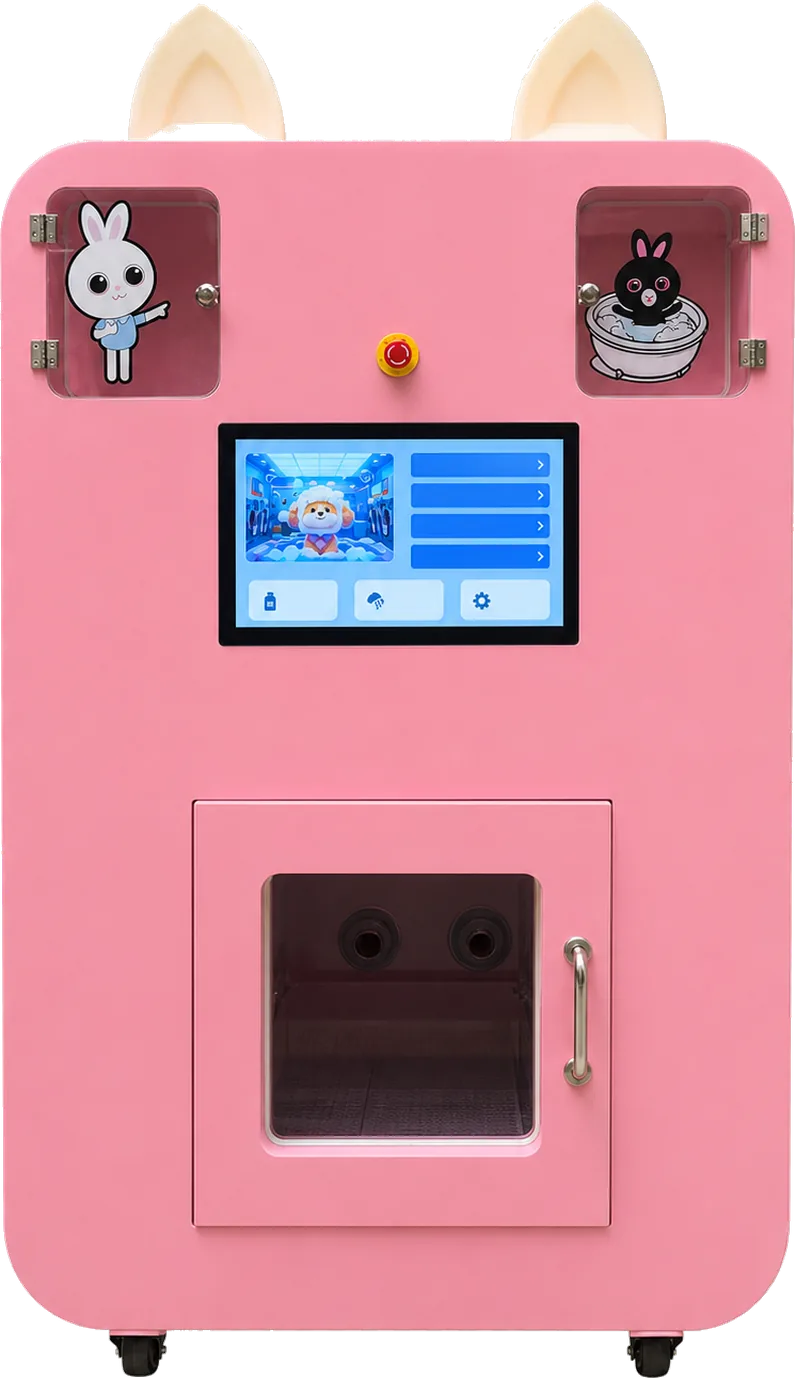
PetWash Pro
Indoor or outdoorFully automatic — any team member loads, presses, and returns to the yard. The weatherproof cabinet works indoors or yard-side, −10 °C to 55 °C.
See the Pro →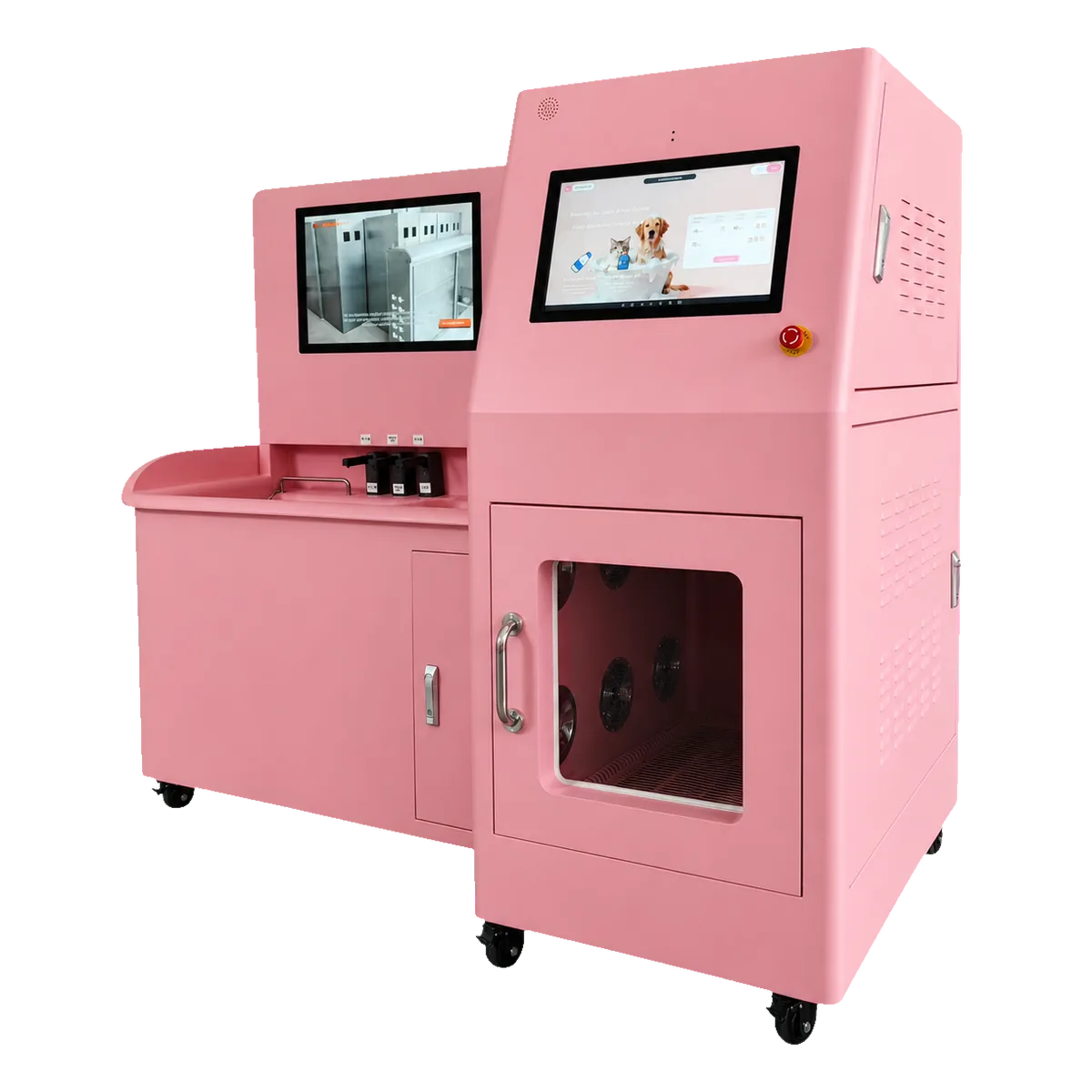
PetWash Tub
Indoor or outdoorHands-on tub plus drying cabinet — two dogs moving at once.
See the Tub →PetWash Max
Indoor or outdoorPickup hour asks two things at once. The Max is our flagship, and the only model that answers both. Load a dog behind the automatic door and the cycle finishes without you. The second door opens on a manual bay — constant-temperature water gun and dryer — for the one that needs hands on it.
See the Max →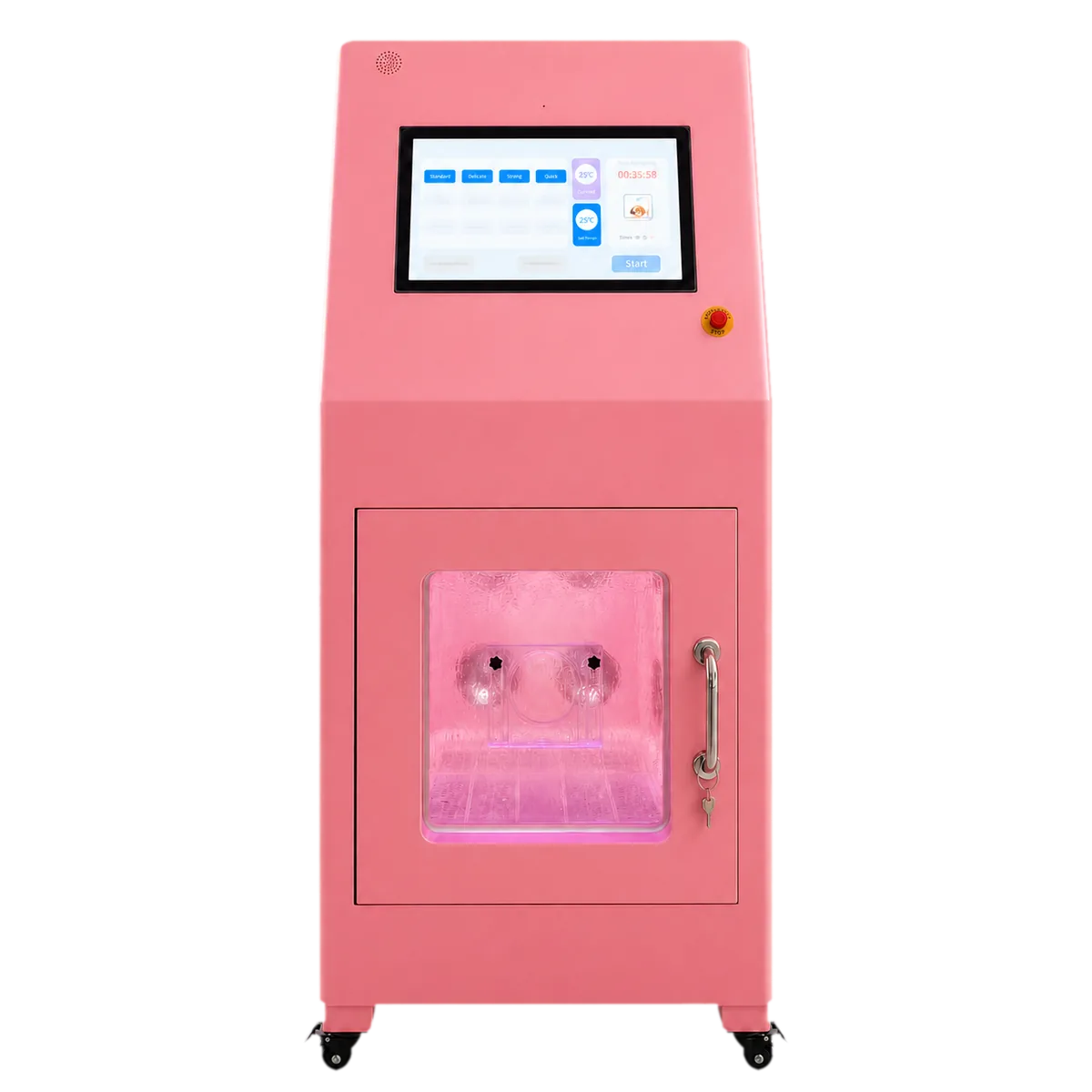
PetWash Store
Indoor78 cm of wall is all it needs. Full automatic to 70 kg, so the go-home bath happens without moving a dog off site.
See the Store →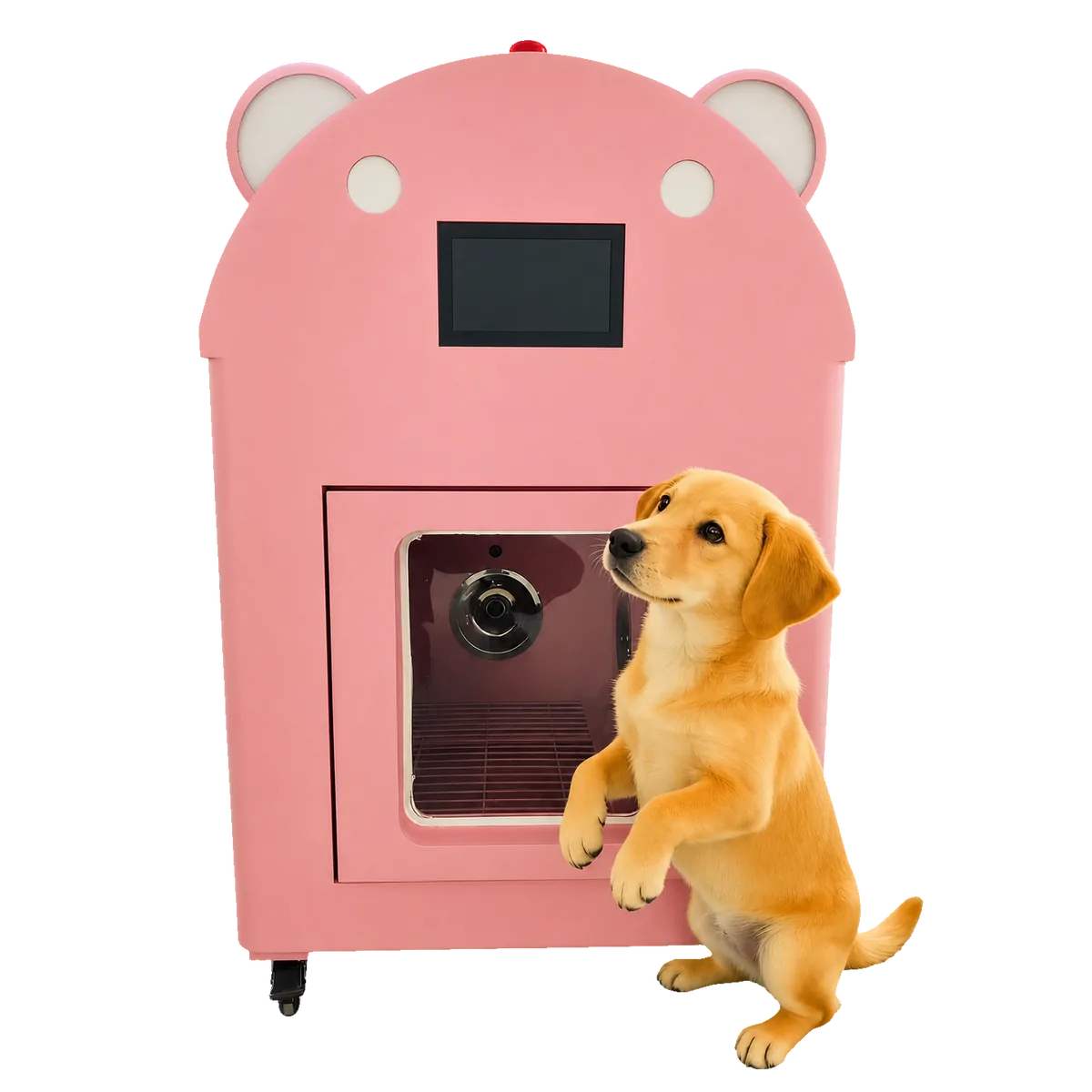
PetWash Mini
IndoorFor the toy-breed group. 81 kg on casters and a normal socket, so it moves to whichever room needs it. Dogs and cats to 15 kg.
See the Mini →Self-Serve Tub vs Automatic Pet Wash Machine for a Daycare
Both are ours, so here is the honest split. It comes down to throughput: count the baths you want out the door in the last two hours.
PetWash Tub — when hands are already on the dog
- You have a groomer or a bather on staff and the work is getting done anyway
- Two dogs move at once — one in the open tub, one in the drying cabinet
- Soak and bath packages nobody else offers: 60 minutes for a large dog, 30 for a small one
- Dual screens, 21.5-inch and 32-inch, for menus and signage in a grooming bay
- Long footprint: 1960 × 630 × 1800 mm, 254 kg, 3200 W daily / 4000 W bath
- The trade-off: throughput is capped by the person, not by the cycle
Automatic cabin — when the pickup hour is the constraint
- Any team member runs it — load, press, go back to the yard
- Back-to-back 30-minute cycles: 3–4 dogs through the pickup rush per machine
- Self-disinfects for 4 minutes after every dog, so there is no scrub-down between baths
- PetWash Pro for most daycares — large cabin, indoor or yard-side, −10 °C to 55 °C
- PetWash Max when the queue is real — double doors, external dryer, water gun, pets to 70 kg
- The trade-off: a matted coat still wants your groomer, not a cycle
Plenty of daycare-plus-grooming sites run one of each: the Tub for booked grooms, an automatic cabin for the bath-before-pickup upsell.
Certified for Export: CE, LVD, EMC & RoHS
You don’t have to worry about compliance. Every machine already meets CE, LVD, EMC, and RoHS standards, and we hand you the documents you need for customs, insurance, or your property manager.
CE certified
CE is the EU’s official conformity mark, and we include the certificates with your order for customs, insurers, and property managers.
LVD tested
LVD stands for the EU Low Voltage Directive, the electrical safety test that CE certification is built on. Tested to IEC 60335-2-75 with IEC 60335-1 — the standard written for commercial dispensing appliances.
EMC tested
It means the machine won’t cause electromagnetic interference with payment terminals or nearby equipment.
RoHS compliant
RoHS compliant means the machine is free of restricted hazardous substances, so it’s safe to import and operate. Assessed to EN IEC 63000:2018.
Where Else a Pet Wash Station Earns
Make Splash Day Pay — Get a Pet Wash Station Quote
Tell us where you are and how many you need. A recommendation and a price come back within 24 hours, sized for the dog count you actually run.
- Factory-direct price, no middleman
- 30-minute cycles built for the pickup rush
- Drop-off script and signage artwork included
- Honest advice on volume — one machine or two
No spam. Your details are used only to prepare your quote.
Pet Wash for Dog Daycares — FAQ
What daycare owners ask before adding one.
How do daycares price the bath add-on?
Typically $15–20 on top of the $18–30 daily rate, sold at drop-off ("It's splash day. Bath before pickup?") or as a standing weekly add-on. Add-on services already put 20–40% on top of pet-care bills, and this is the easiest one to say yes to. At 100 baths a month, that is $18,000 a year against $1.20–3.50 per wash in water, power, and shampoo.
Can staff run baths during the last hour?
That’s the workflow: load the machine at 4pm, dog is washed, dried, and fluffy by 4:35 while your team supervises the yard. With back-to-back cycles, one machine sends home 3–4 clean dogs in the final two hours; busy sites run two machines (or a double-door PetWash Max) to double that.
Is it safe with excitable dogs?
Radar and infrared sensors monitor the pet throughout; the door auto-unlocks after 30 seconds without vital signs; water is capped at 42 °C; and there’s a physical stop button. Staff stay in view — same supervision as your play yards.
Does it help with the wet-dog smell problem?
The cabin is sealed. After every dog it disinfects itself with ozone, infrared and UV-C, and collects the hair and waste water inside. The hair goes into an internal filter, not your floor drain. To install it you need only a standard water inlet and a drain. Your lobby smells like a lobby.
What is the lead time on a pet wash machine order?
Twenty-five business days from order confirmation. Sea freight is normal; courier costs more but takes weeks off the wait if you want it running before a busy season.
Will dog hair clog our floor drains?
No. Hair and waste water are collected inside the machine every cycle instead of being flushed into your drains — that clog is the single most reported failure with open tubs, so it was designed out. Your team empties the collection on normal rounds, and because the drainage story is simple, the plumbing sign-off conversation is short. We supply spec sheets for permitting.
How do we stop one dog passing something to the next?
The cabin disinfects itself automatically after every wash — ozone or anion, infrared and UV-C for 4 minutes, killing 99.9% of germs — and the hair and water from the previous dog have already been collected and removed. In a building that already manages kennel cough risk, it is the one shared surface that gets cleaned every time without anyone remembering to do it.
What certificates come with the machine?
CE (LVD + EMC) and RoHS. The certificates ship with your order, which is what customs needs at import and what your insurer or landlord asks for when a new machine goes into a licensed facility. Ask any supplier to show you the actual documents rather than a claim.
What does each bath cost us in water and power?
About 2–2.5 kWh and 0.09–0.11 m³ of water per wash (the Mini is at the low end). With shampoo and conditioner, published operating cost for machines like this runs $1.20–$3.50 per wash depending on your local rates — against a $15–20 add-on price.
We already have a grooming room. Is a machine still worth it?
Usually yes, because they solve different problems. Your groomer handles booked appointments and matted coats; the machine handles the volume upsell in the last two hours, when your groomer is finished and your staff are on the floor. If you want both hands-on work and drying happening at once, the PetWash Tub does that in one unit.
What happens if the pet wash machine breaks and you are on the other side of the world?
You film the fault, our engineers diagnose it with you on a live video call, and the replacement part ships free with fitting instructions. Software updates install remotely. Cover is 1 year on the whole machine, with maintenance support for life. We run our own pet wash stores, so the machines get supported the way we need ours supported.
Can parents pay for a wash themselves at the weekend?
Yes. Every washer takes Nayax payments, 80+ channels worldwide, and you set the on-screen packages and prices yourself — wash-and-dry or dry-only, by pet size, coat and time tier. Some daycares bill the add-on on the invoice midweek and open the machine as self-serve on Saturdays. Networked units include the free 12-function backend, with a chain view if you run more than one site.