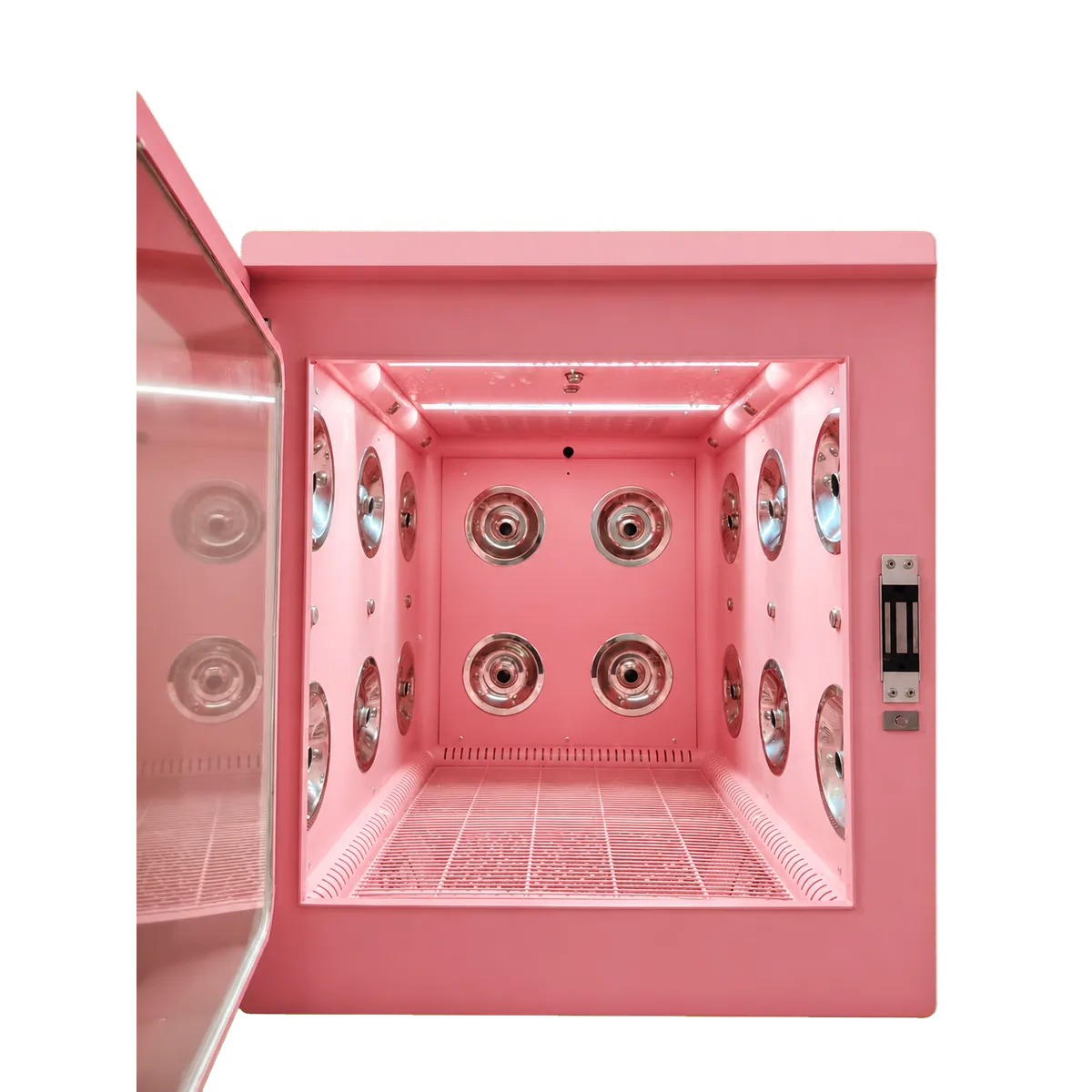
Thinking about adding an automatic pet wash to your property for the extra income? But worried a customer’s dog could get hurt in it?
Or has what you read online put you off? Search these machines and the word “cruel” turns up fast.
Both are fair worries, so here is the straight answer. An automatic pet wash can be safe for commercial use. That holds when the machine has reliable safety controls, a real hygiene system and pet-friendly design.
Read on!
What decides it
Five things: a steady water temperature, gentle water pressure, quiet drying, life sensors watching the animal, and a disinfection cycle between customers. Not every machine has all five, and not every pet should be put in one.
Is an Automatic Pet Wash Safe for Commercial Use?
Yes, when the machine is designed for repeated public use.
That condition carries the whole answer. Your machine will run many times a day. It takes animals of every size, handled by owners who have never used one before. Home-grade parts do not survive that, and neither does a design that assumes a trained operator is standing there.
Commercial safety rests on four things. The engineering inside the cabin. The sanitation between animals. The maintenance you actually do. The guidance you give the customer. Weak in one of them and the other three will not save you.
Automatic pet wash machines are not equally safe, and the difference does not show in a photo. Two cabins can look the same and behave very differently when a nervous dog moves at the wrong moment.
So check machine safety first, then compare price. Buy the other way round and you end up with a cheap machine nobody uses twice.
Why Automatic Pet Wash Safety Matters to Business Owners
Your customer decides in the first thirty seconds. They look through the window, watch their dog, and either relax or reach for the door.
That decision is your revenue. A pet that comes out calm and dry brings its owner back every few weeks. A pet that comes out frightened ends the relationship, and usually takes a refund and a review with it.
Complaints cost more than they look. One bad wash costs you the refund, the staff time to settle it, and every customer who reads about it later.
Safety also sets your staffing. A machine you trust runs self-service, and your team checks it instead of operating it. A machine you do not trust needs somebody standing beside it, which removes the reason you bought it.
So safety belongs in the ROI column, not only on the spec sheet. It drives repeat use, holds complaints down, protects your reviews and keeps labor low.
What Makes an Automatic Pet Wash Safe?
Ten things to look for. Each one is either built into the hardware or it is not.
- Stable water temperature. Ours is held at 38 °C ± 2 °C by PID control, and a separate NTC sensor cuts the machine off above 42 °C. Temperature should be a hardware function, not a number an operator can raise on a screen.
- Gentle water pressure. Enough to rinse a coat, nowhere near a pressure washer. Ours is adjustable between 0.1 and 0.5 MPa.
- Controlled airflow and drying temperature. Even air over the whole animal, under the same over-temperature cutoff. Uneven airflow means hot spots and a longer cycle.
- Low-noise drying. Noise is what frightens animals, not water. Hand-held force dryers commonly pass 100 dB. Ours stays at or below 65 dB.
- A viewing window. The owner watches the whole cycle. It is the most underrated safety feature in the cabin, because somebody who is watching stops trouble early.
- A physical emergency stop. A real button on the outside of the cabinet. Not a menu item on a screen.
- Life detection with auto-unlock. mmWave radar and infrared track the animal for the whole cycle. If the sensors lose the signal for 30 seconds, the door unlocks on its own.
- A door that opens when the power fails. The lock is held shut electrically, so a power cut releases it. A pet cannot be shut in by a fault or by choice.
- A non-slip floor and rounded cabin surfaces. Our base plate is thick, hand-finished and rounded, so it is comfortable under a paw. No sharp edges at animal height.
- Controls a first-time customer understands. Big steps, plain wording, one obvious way to stop. Confusing controls create the panic that the machine is blamed for.
None of this makes a machine right for every animal. What it gives you is a machine that behaves the same way on the two-hundredth wash as on the first.
Automatic Pet Wash Hygiene: How to Reduce Cross-Use Risks
Your machine washes a different animal every twenty minutes. Some of them arrive with a skin problem, and nobody tells you which ones.
That risk does not exist in a home bathroom. It is also the risk your customers think about, even when they never say it out loud.
Ask four questions about any machine you are considering.
- What happens between animals? Our cabin runs a four-minute cycle after every order, using ozone and anion, infrared and UV-C, which kills 99.9% of germs. Ask whether the cycle is automatic and how long it takes. The word “disinfection” in a brochure is not a cycle.
- Where does the hair go? Hair is the part of a pet wash that fails first. Ours is collected inside the machine with the waste water in the same cycle, and the filter is emptied weekly.
- How does the water leave? Look at the drain design and at how easily you can reach the filter. A drain you cannot service yourself becomes a smell first and a call-out afterwards.
- What removes shampoo residue? Our wash ends with a final clean-water rinse after the conditioner. Residue left in a coat is what makes a dog itch two days later, and the owner will blame the machine.
Hygiene affects trust as much as it affects health. Put the cleaning routine where customers can see it. A line on the screen or a small sign at the machine is enough, and it answers the question they were too polite to ask.
Which Pets Should Not Use an Automatic Pet Wash?
Publishing this list costs us washes. We publish it anyway, because one bad experience at your site is worth more than one sale to us.
Keep these pets out
- Extremely anxious animals, and any animal that panics in a closed space.
- Sick or injured animals, and anything recovering from surgery.
- Animals with a serious heart, breathing or skin condition, unless their vet has approved it.
- Aggressive animals that cannot be walked calmly into the cabin.
- Very young puppies and kittens. The owner should ask a vet about the right age for a first bath.
- Anything over the weight limit, which is 70 kg on the large cabins and 15 kg on the compact model.
These are fine, with a careful first visit
- Flat-faced breeds, on a shorter drying program with the owner watching closely.
- Older animals with stiff joints. The rounded base plate is comfortable underfoot.
- Nervous first-timers, after a short dry-only cycle so the cabin becomes familiar.
- Cats, which do better than most people expect. Noise is the deciding factor.
- Dogs with itchy or sensitive skin. The bath water is hydrogen-rich, which helps with dryness.
Put a short version of the left-hand list on the wall beside the machine. It protects the animal, it protects you, and customers read a posted rule as confidence rather than as a warning.
We build machines, not medicine. When an owner asks whether their pet’s condition rules it out, the answer is that their vet decides.
How to Choose a Safe Automatic Pet Wash Machine
Compare safety features first and price last. Use these questions on every supplier you shortlist, and listen for numbers.
| Ask the supplier | What a good answer sounds like |
|---|---|
| How is the water temperature controlled? | A figure and two independent parts. Ours is PID control at 38 °C ± 2 °C, with a separate sensor that cuts out above 42 °C. |
| How loud is the dryer? | A decibel figure, not the word “quiet”. At or below 65 dB is what an anxious animal can accept. |
| Is there a physical emergency stop? | Yes, on the outside of the cabinet. Ask what the door does when the power fails, too. |
| What runs between animals? | An automatic cycle with a stated method and length. Ours is four minutes of ozone, infrared and UV-C. |
| How do I reach the filters and the drain? | A door and a hand. If servicing needs a technician, it will not happen weekly. |
| What is the cabinet made of? | Steel rated for outdoor use, with a base plate built for weight. We use international-standard steel that does not peel outdoors. |
| Which certificates ship with the machine? | CE (LVD + EMC) and RoHS. Ask for the documents, not for the claim. |
| What does the warranty cover, and for how long? | Ours is one year on the whole machine, and maintenance for life. |
| What happens when something breaks? | A named process. Ours: you film the fault, an engineer diagnoses it on a live video call, and the replacement part ships free with instructions. |
| Who trains my staff? | Somebody who has run a machine, not only sold one. Ask how the training is delivered and what is written down. |
Two more things decide how safe the machine stays. Choose commercial-grade materials that handle daily use, because a cabin that degrades becomes a cabin that leaks and scratches. And check that spare parts are available in your country without a six-week wait.
Price still matters. It just belongs after this list, because a machine that customers avoid is expensive at any price.
How to Keep an Automatic Pet Wash Safe After Installation
A safe machine and a safe site are not the same thing. The second one is your job.
Every day
- Look inside the cabin before the first customer. Check for hair, standing water and anything left behind.
- Wipe the window and the screen. A dirty window stops an owner watching, which removes a safety feature.
- Run one cycle and confirm the water arrives warm and the dryer sounds normal.
Every week
- Empty the hair filter and check that the drain runs clear.
- Top up shampoo and conditioner, and check the lines for blockages.
- Test the emergency stop, and confirm the door releases as it should.
Ongoing
- Check water temperature and drying performance against the figures in the manual.
- Keep the customer instructions visible and readable at the machine.
- Train every staff member on the emergency stop and on basic troubleshooting.
- Keep a dated maintenance log. It settles disputes, and it shows an insurer that the site is run properly.
None of this takes long. It is a few minutes at opening and a longer check once a week. Skip it and you get the phone call at the worst possible moment.
Final Verdict: Is an Automatic Pet Wash Safe for Your Business?
Yes, when the machine combines pet comfort, sanitation, safety controls and commercial durability. Remove one of those four and the answer changes.
A safe automatic pet wash earns twice for you. The pet comes out calm, so the owner brings it back. The cabin cleans itself between customers, so your team checks the machine instead of running it. That is how a self-service site builds regulars.
PetWashPlus automatic pet wash machines are designed for commercial locations that need safer, cleaner and easier pet washing operations. We run our own stores as well, so the machine has already met the problems your site will find.
Whoever you buy from, go through the safety features one by one and ask for the number behind each one. It is a short conversation, and it tells you most of what you need to know.